
The gut: digestion, protective border and home of the gut bacteria.
The gut breaks down food and brings the nutrients into the blood. At the same time it is the largest border between the body and the outside world – and home to trillions of bacteria that help with digestion and defence.

The essentials in 30 seconds
- 1
In the gut, food is broken down into small building blocks and absorbed into the blood through the gut wall.
- 2
The gut wall is a tight border: nutrients may pass through, germs and undigested food particles may not.
- 3
The gut bacteria use fibre, feed the gut wall with it and keep unwanted germs in check.
The path of food
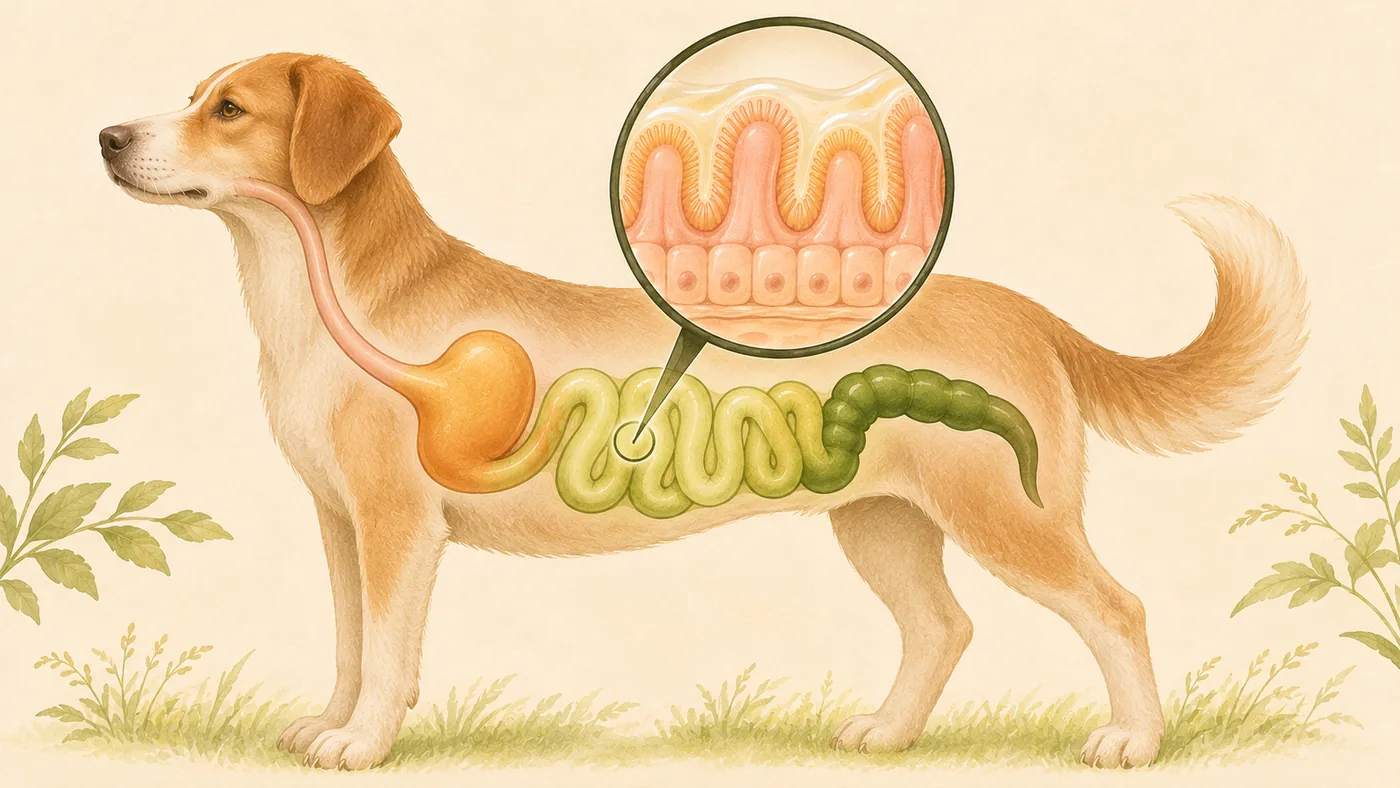
From the bowl to the stool, food passes through three main stations. Something different happens at each one:
- Stomach: the food is mixed with stomach acid, pre-digested and passed on in portions. The acid also kills many germs – a first line of protection.
- Small intestine: digestive enzymes – proteins that cut up food like scissors – break down protein, fat and carbohydrates. They come from the pancreas, together with bile acids from the liver for the fat. The small building blocks pass through the gut wall into the blood.
- Large intestine: here water is drawn from the gut contents and the stool becomes firm. What the dog cannot digest itself – above all fibre – is used here by the gut bacteria.
So that the small intestine can absorb as much as possible, its inner surface is heavily folded: millions of finger-like projections, the intestinal villi, enlarge the surface many times over.
The gut wall: a border with checks
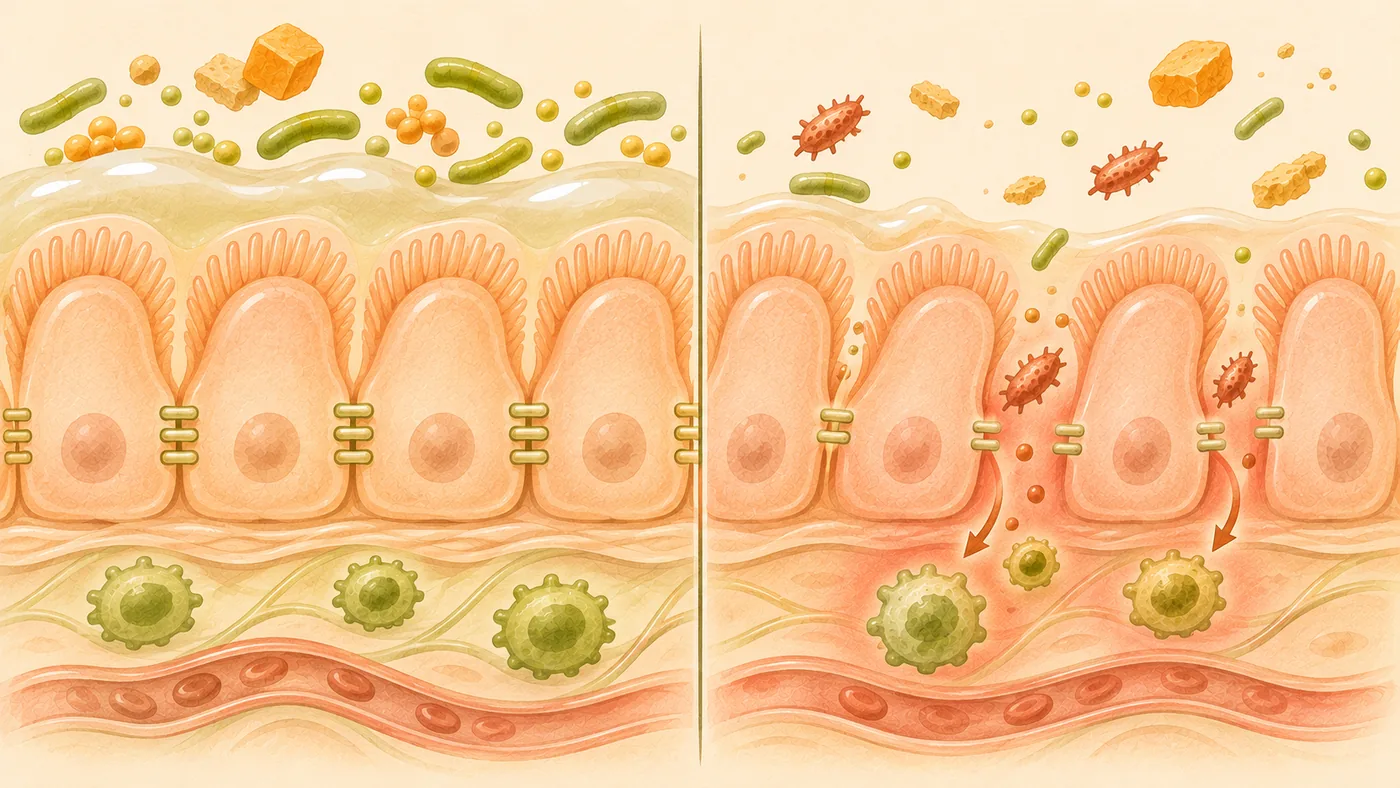
The gut wall consists of a single layer of cells. Between the cells are connections that hold them together like zips (technical term: tight junctions). Above them lies a mucus layer that keeps the bacteria at a distance from the wall. Beneath the wall, immune cells wait and check everything that does get through.
- Good – the wall is tight (image left): only nutrients get through. The immune cells beneath stay calm.
- Unfavourable – the wall becomes leaky (image right): gaps form between the cells. Germs and undigested food particles get into the gut wall, the immune cells react, and inflammation can develop.
This has been well studied in dogs: in dogs with a certain chronic intestinal inflammation (lymphocytic-plasmacytic enteritis), the gut wall was measurably more permeable than in healthy dogs1. Dogs with intestinal diseases had more antibodies against food components in their blood – an indication that more of them had passed through the gut wall2. Experts therefore see a disturbed gut barrier as a central element of chronic intestinal diseases3.
The good news: the gut wall renews itself continuously. Old cells are shed at the tips of the villi, new ones grow up from below. Within a few days the inner cell layer has been completely replaced.
The gut bacteria: a small organ of their own
A community of many different bacterial species lives in the gut: the gut flora or microbiome. Its composition differs in every dog and remains remarkably stable in a healthy state4. Its most important tasks5,6:
- Energy for the gut wall: from fibre, the bacteria form short-chain fatty acids such as butyrate. Butyrate is the most important source of energy for the cells of the large intestine and dampens inflammation. More fermentable fibre in the food increases its production4,7 – which is good for the gut.
- Protection against germs: certain bacteria such as Clostridium hiranonis convert bile acids. The converted bile acids keep unwanted germs such as E. coli or Clostridium perfringens in check5,8.
- Occupying space: where beneficial bacteria grow, pathogens find less space and food.
- Training for the defences: the gut bacteria are in constant exchange with the immune cells of the gut wall and help them to distinguish the harmless from the dangerous.
- Diversity creates stability: the more different species work together, the more resilient the gut flora is. Antibiotics and other influences can reduce this diversity6.
If the composition gets out of balance – fewer beneficial, more unwanted bacteria – this is called dysbiosis.
What the gut does for defence and repair
Nowhere does the body encounter as many foreign substances as in the gut. That is why several protective layers work together here:
- Mucus and protective antibodies: the intestinal lining releases its own antibody, IgA. It catches germs before they reach the gut wall. In studies, fermentable fibre in the food increased the amount of IgA in the stool7,9 – a nice example of how food, gut bacteria and defences are connected.
- Immune cells in the gut wall: a large part of the body's immune cells sits in and beneath the gut wall. How they work together is explained on the immune system page.
- Rapid renewal: because the gut wall renews itself every few days, minor damage is repaired particularly quickly. The bacteria supply the energy for this in the form of butyrate.
After antibiotics: how long the gut flora needs
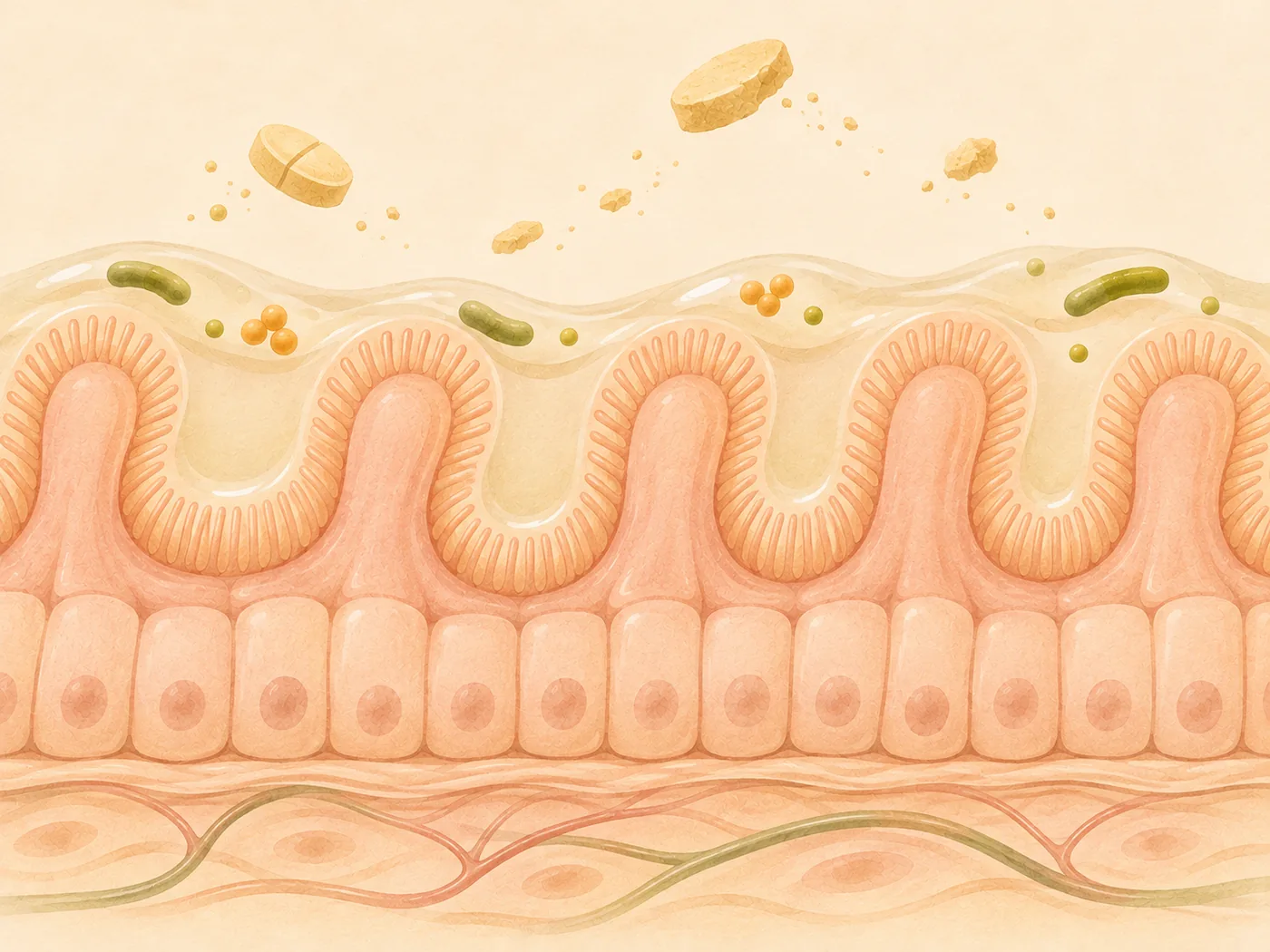
Antibiotics are often indispensable for bacterial infections. However, they do not distinguish between disease-causing and beneficial bacteria. Studies in healthy dogs show how strongly and for how long this changes the gut flora:
- Metronidazole: the gut flora was altered and less diverse for at least four weeks. In addition, the bacteria formed fewer converted bile acids – precisely those that protect against unwanted germs10. At first, it was mainly bacteria that ferment fibre that were lost; afterwards the gut flora recovered11.
- Enrofloxacin and metronidazole together: the diversity of the gut bacteria had still not fully returned 56 days after the end of treatment12.
- Tylosin: how long the changes lasted after stopping varied greatly from dog to dog13.
Good to know: in one study, healthy dogs received a probiotic after the antibiotic. This preserved the diversity of their gut flora and promoted butyrate-producing bacteria14. The example on the overview page shows how the gut recovers step by step.
After worms: how the gut wall grows back
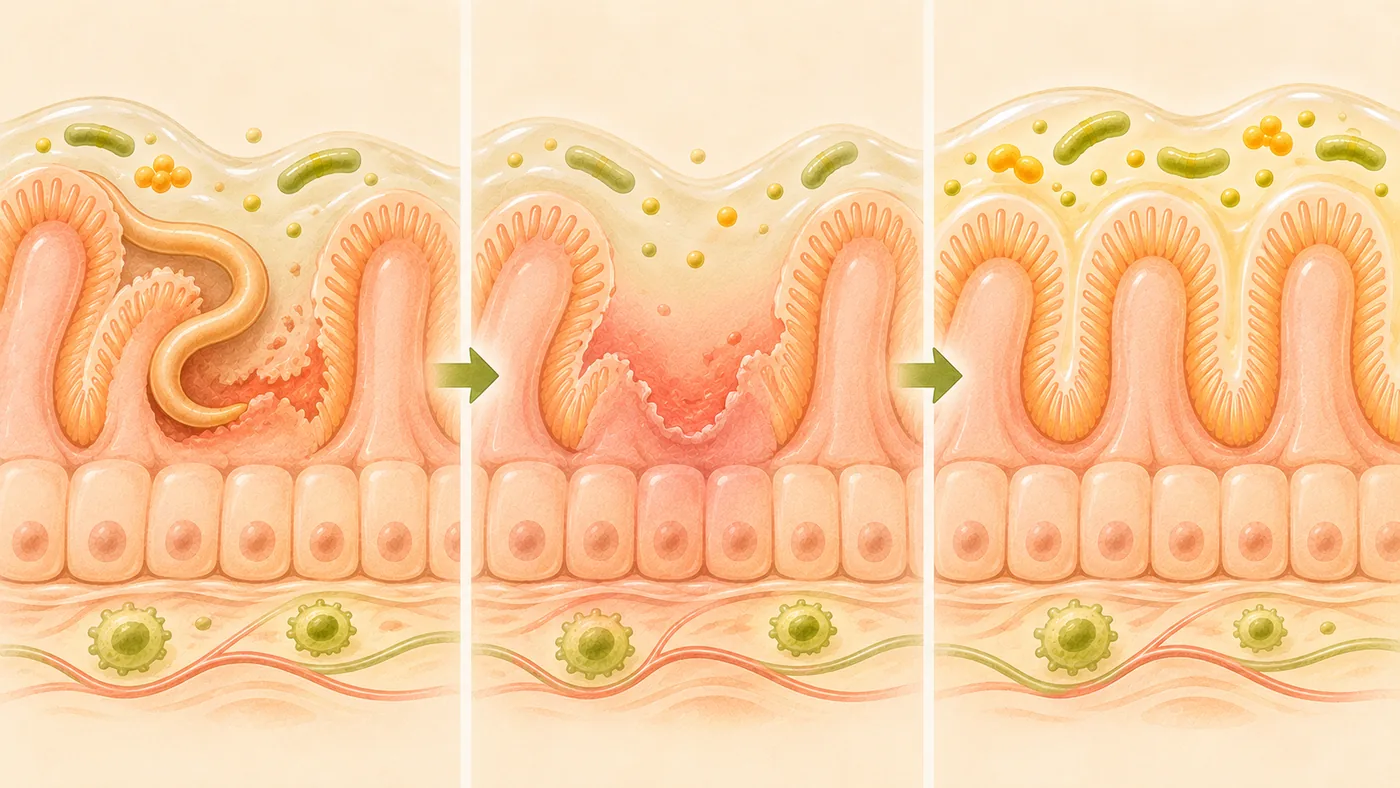
Worms such as roundworms or hookworms live in the gut. Some attach themselves to the gut wall and injure the intestinal villi in the process. Hookworms also suck blood. The result can be soft stools, weight loss or a dull coat, because the damaged villi absorb fewer nutrients.
After deworming by the veterinary practice, the repair begins – the image shows it in three steps:
- Left – the injury: the worm has left a sore spot on the villi.
- Centre – clean-up: immune cells clear away damaged cells, the area is still slightly reddened.
- Right – renewal: new cells grow up from deep in the gut wall, the villi become long and dense again.
Because the gut wall renews itself continuously anyway, such damage usually heals quickly. Nutrient absorption then returns to normal as well.
What is good for the gut
- Fibre: it is the food of the gut bacteria. A fibre supplement increased the beneficial fatty acids in the stool of dogs and lowered harmful putrefactive substances such as ammonia4.
- Fresh, minimally processed rations: family dogs fed this way had firmer stools and a more diverse gut flora15.
- Gradual changes of food: the gut flora needs about six days to adjust to a new food16. How to switch correctly is explained on the nutrition page.
- Calm and good living conditions: shelter dogs kept in cramped conditions without activity had more stress hormones and a less diverse gut flora17. So stress also affects the gut.
Terms briefly explained
- Intestinal villi
- Finger-like projections of the small intestine wall. They enlarge the surface through which nutrients are absorbed.
- Gut flora / microbiome
- The community of all microorganisms in the gut, above all bacteria.
- Butyrate
- A short-chain fatty acid that gut bacteria form from fibre. The most important source of energy for the cells of the large intestine.
- Bile acids
- Digestive juices from the liver that break down fat. Converted by gut bacteria, they protect against unwanted germs.
- Tight junctions
- The connections between the cells of the gut wall. They keep the wall tight like a zip.
- Dysbiosis
- A disturbed balance of the gut flora: fewer beneficial, more unwanted bacteria.
- IgA
- A protective antibody released by the intestinal lining. It catches germs before they reach the gut wall.
What studies show: the sources
The superscript numbers in the text refer to these studies. All details have been verified via their DOI and lead to the original publication.
- Measurement of intestinal mucosal permeability in dogs with lymphocytic-plasmacytic enteritis (2007). DOI: 10.1292/jvms.69.745
- Serum IgE and IgG responses to food antigens in normal and atopic dogs, and dogs with gastrointestinal disease. (2003). DOI: 10.1016/s0165-2427(03)00033-3
- Canine chronic enteropathy—Current state-of-the-art and emerging concepts (2022). DOI: 10.3389/fvets.2022.923013
- Characterization of fecal bacterial populations in canines: effects of age, breed and dietary fiber. (2002). DOI: 10.1007/s00248-002-0001-z
- The Role of the Canine Gut Microbiome and Metabolome in Health and Gastrointestinal Disease (2020). DOI: 10.3389/fvets.2019.00498
- Understanding the diversity and roles of the canine gut microbiome (2025). DOI: 10.1186/s40104-025-01235-4
- Consumption of identically formulated foods extruded under low and high shear force reveals that microbiome redox ratios accompany canine immunoglobulin A production. (2020). DOI: 10.1111/jpn.13419
- Diet-induced changes in fecal microbiota composition and diversity in dogs (Canis lupus familiaris): A comparative study of BARF-type and commercial diets. (2023). DOI: 10.1016/j.cimid.2023.102007
- The effect of age and carbohydrate and protein sources on digestibility, fecal microbiota, fermentation products, fecal IgA, and immunological blood parameters in dogs. (2017). DOI: 10.2527/jas.2016.1302
- Effects of metronidazole on the fecal microbiome and metabolome in healthy dogs. (2020). DOI: 10.1111/jvim.15871
- Conserved signatures of the canine faecal microbiome are associated with metronidazole treatment and recovery. (2024). DOI: 10.1038/s41598-024-51338-7
- Effects of Synbiotics on the Fecal Microbiome and Metabolomic Profiles of Healthy Research Dogs Administered Antibiotics: A Randomized, Controlled Trial (2021). DOI: 10.3389/fvets.2021.665713
- Long-term impact of tylosin on fecal microbiota and fecal bile acids of healthy dogs. (2019). DOI: 10.1111/jvim.15635
- Beneficial effects of probiotics on dysbiosis of gut microbiota induced by antibiotic treatment in healthy dogs. (2025). DOI: 10.1016/j.rvsc.2025.105674
- Diet-induced metabolic and faecal microbiome responses in pet dogs fed a minimally processed versus extruded kibble diet. (2026). DOI: 10.3389/fvets.2026.1734572
- Longitudinal fecal microbiome and metabolite data demonstrate rapid shifts and subsequent stabilization after an abrupt dietary change in healthy adult dogs. (2022). DOI: 10.1186/s42523-022-00194-9
- Linking shelter conditions to health: A multisystem analysis of stress, metabolism, and fecal microbiota in dogs. (2026). DOI: 10.1371/journal.pone.0350401